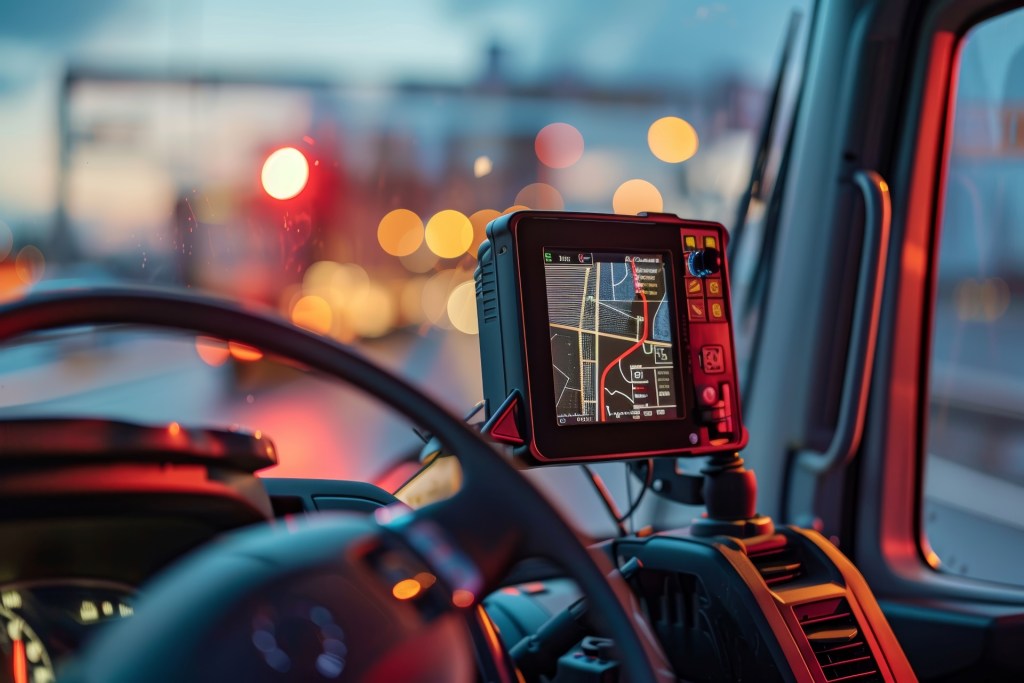
AI has come a long way since the last Truck Show and platforms like ChatGPT and Google’s equivalent Gemini have popularised the technology. Now, leading telematics providers are harnessing the unparalleled processing power of AI to take fleet management into the future – many of which will be on display at the 2025 Brisbane Truck Show
The 2023 Brisbane Truck Show was the first ever to feature artificial intelligence (AI) on a number of stands, which promised to capture and interpret large amounts of data to improve efficiency, safety and overall fleet management.
However, AI has come a long way since the last show and platforms like ChatGPT and Google’s equivalent Gemini have popularised the technology.
Now, leading telematics providers are harnessing the unparalleled processing power of AI to take fleet management into the future.
A major shift is coming, explains Webfleet Marketing Manager for Australia and New Zealand, Scott Elkington, that can be likened to that which occurred during the ‘dot-com’ boom.
Imagine being able to unlock the hidden secrets lurking within your fleet’s data, improving safety, productivity and ultimately profitability – all with the click of a mouse.
It will look at the data on how people drive and all those sorts of things, and you might get another three per cent here or 10 per cent there in terms of fuel savings or other efficiencies – it all adds up.
“Do you remember when Google came along? This is like the next Google,” he suggests.
“It changed the scope of things, being able to use Google to find things out. AI is going to be like that. It’s not going to replace people, but fundamentally we’ll do whatever we can to save time and make our jobs easier and better, which is where AI comes in.”
The biggest change for fleet managers across the past decade is the incredible amount of data being collected. Running a successful fleet has never been a more complex undertaking, but AI promises to unlock the true potential of telematics by giving an average fleet manager more computing power than the entire nation had a decade ago.
“Back in the day we were looking at fuel efficiency and how people drove the truck, but now there’s so much data being collected – how do you make sense of it all?” Elkington asks.
“Well, AI can come in and say, ‘these are all the things that we’ve noticed over three months that you can improve’ and it can make suggestions as well. It will look at the data on how people drive and all those sorts of things, and you might get another three per cent here or another 10 per cent there in terms of fuel savings or other efficiencies – it all adds up.”
In simple terms, Elkington explains that the technology allows fleet managers to “stay a mile wide and an inch deep”, while AI trawls and analyses massive quantities of data collected out on the road.


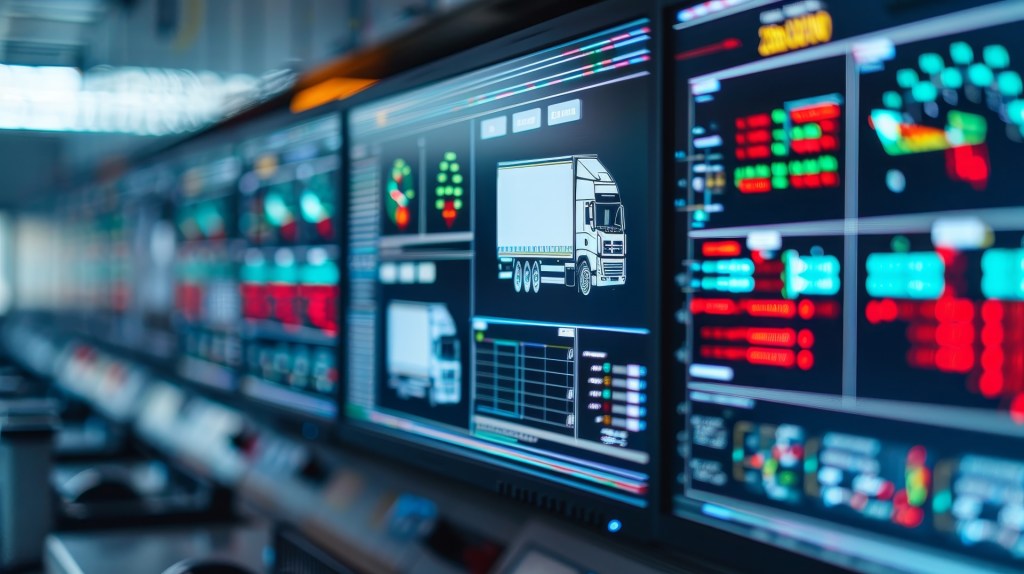
AI will provide fleet managers with a vast array of data regarding driver performance – all at the click of a mouse
“There is all this data coming in from all these different places, so AI lets you, as a person, stay a mile wide and an inch deep – but the AI will then go a mile deep for you,” he says.
“So with our AI Assistant that we launched recently, which is similar to something like ChatGPT but inside the Webfleet platform, you can ask it questions. You could say, ‘give me the driver with the highest average speed across the last month’, and it’ll pull that data for you from all of the data available. It’s enabling you to track more without having to track more things, if that makes sense, so you’re not having to pore over data sets.”
The job of the fleet manager will therefore become focused on higher-level decision making, while AI handles the data analysis side of things. The advice Elkington is giving fleets, though, is to get in early to start taking advantage of the technology.
“It’s just there to make your life easier and it’s going to become a major part of how we do things,” he says. “So you may as well get in at ground floor and set some good rules around how you use AI.”
While driver monitoring systems, in various forms, have been around for a decade or more, AI will unlock the ability to monitor more than ever – using large amounts of data to inform safer, more fuel-efficient driving.
“You can only improve what you can measure, and there’s now so much you are able to measure,” Elkington says.
It’s not going to replace people, but fundamentally we’ll do whatever we can to save time and make our jobs easier and better, which is where AI comes in.
“Originally telematics was just vehicle tracking – ‘where’s my truck, it’s here, brilliant’. Now it’s about who’s driving, how they’re driving, whether they are harsh braking, steering or accelerating, excessively idling, and things like mobile phone use or distracted driving.
“That’s where AI starts to help, because it can measure and monitor so many of these things over a long period of time – we’re just not capable of processing it all as people.”
It isn’t just transport companies that stand to gain from the AI smarts in the latest telematics systems either; road managers will soon be able to utilise data to assess routes, upgrades and asset management.
“With any Webfleet-connected vehicle we can look at the commercial journeys through a given area,” Elkington says.
“Let’s say you’re a local government area (LGA), you could take the anonymised dash-cam footage from the 40,000 vehicles that drive through there each day and run it through AI road condition monitoring to identify potholes or deteriorating surfaces.
“It’s really useful for anyone who does a lot of off-road, councils or mines where they have private roads. We can also look at things like crash hotspots too. You just couldn’t get a human to analyse 10,000 hours of driving footage each day, but this technology gets rid of all those human hours and lets the human do the executive function.”


Fleet managers now have access to a massive amount of data being collected via a range of technologies, including in-cab systems
Data sharing is a point of contention as telematics providers gather and store large quantities of sensitive information. Many of the standard AI platforms don’t offer the level of data sovereignty required by transport fleets, because the various ‘AI engines’ learn from and then share the information fed to them.
“As fleet managers or operators, we handle some very sensitive data like customer addresses, goods transported, all the commercially sensitive stuff,” Elkington says.
“If you put anything into ChatGPT for example, to summarise something or produce a report, you breach your data policy immediately.
“People need to understand that while these AI models are available and they’re becoming increasingly used in general business, there’s a massive risk to every operator’s data sovereignty.”
The solution, Elkington explains, is to choose an AI platform that is ‘locked down’ and does not share information externally – which many of them don’t.
“Our system is locked down, like a walled garden, which helps you maintain control of your data,” he says.
It’s an incredibly powerful search engine that you can use like you would ChatGPT, but the key is that it’s actually inside your Webfleet so you have a lot of data protection.
These aren’t technologies of the distant future, with various AI-powered solutions available right now in Australia. So what AI-powered systems can you use to supercharge your fleet, today?
Webfleet
Bridgestone Mobility Solutions has rolled out a portfolio of AI-powered systems, with its Webfleet (formerly TomTom) telematics solution forming the centrepiece of its futuristic fleet offering.
Webfleet is a cloud-based suite of fleet management software and while it is already the market leader in Europe, the company is gaining traction in Australia with its comprehensive solution – monitoring everything from mileage to driver distraction.
“So Webfleet is the entire solution, with dashboards that have AI-powered reporting, and if a vehicle’s onboard systems doesn’t have the data, we have devices like dash cams or accelerometers,” says Elkington.
“We have AI in devices already, our dash cam most notably, plus a lot of our data processing within the fleet management solution runs through AI and machine learning models. We also have driver-aids and apps linked in – vehicle apps, logbooks and
POD terminals.”
An exciting addition to the Webfleet functionality is a new AI Assistant, which Elkington says will be available by the time Brisbane Truck Show rolls around.

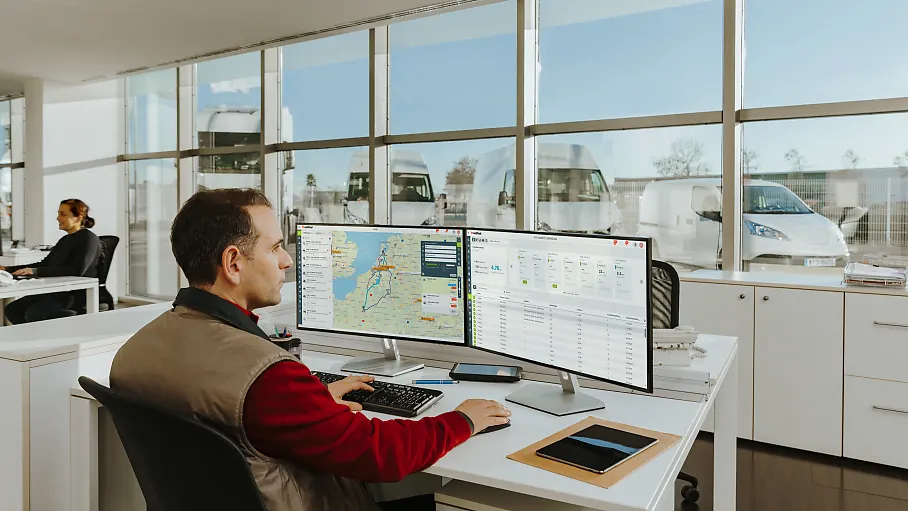

Webfleet’s AI-powered systemsvan monitor everything from truck mileage to driver distraction
“We recently launched the AI Assistant within our cloud solution, which is currently in beta testing with customers, but by Brisbane Truck Show it’ll be available for everybody to use,” he says.
“It’s an incredibly powerful search engine that you can use like you would ChatGPT, but the key is that it’s actually inside your Webfleet so you have a lot of data protection.”
According to global research from Webfleet, Australia is among a handful of the most AI-curious countries with 60 per cent of fleet managers claiming they already use or intend to use AI. It’s no surprise then that Webfleet is bringing its latest AI-powered solutions to the 2025 Brisbane Truck Show.
Teletrac Navman
At the 2023 Brisbane Truck Show Teletrac Navman showed its revolutionary AI-powered dash cam, the IQ Camera, which monitors driver behaviour by analysing a series of metrics in real time.
The IQ Camera watches for behaviour like mobile phone use, erratic movements and concentration on the road ahead, using AI to help drivers remain focused. It also watches the road ahead, looking at things like following distance and lane adherence.
While the camera watches for a range of behaviours, its ability to continuously monitor fatigue indicators like eye closure, head position and other signs of drowsiness makes it a seriously powerful safety companion.
Fleet managers gain real-time footage alongside data insights and are empowered to protect their drivers and gain a competitive edge to win new business.
“By seamlessly integrating driver positioning, facial and physiological measurements, alongside driver assistance metrics that analyse and detect outward-facing actions like following distance, lane adherence and harsh manoeuvring, these devices provide real-time alerts and insights to reduce the likelihood of incidents and promote the well-being of drivers,” says Teletrac Navman Chief Product Officer, Andrew Rossington.
The IQ Camera can offer fleets a competitive edge, Rossington says, using AI and real-time video data to improve overall fleet performance.
“Fleet managers gain real-time footage alongside data insights and are empowered to protect their drivers and gain a competitive edge to win new business,” he says.
Teletrac Navman has since combined AI-powered natural language processing with real-time video and sensor data to unlock the full potential of telematics through its T360 platform. The TN360 system now offers an AI-powered natural language search function that is able to provide key insights on productivity, safety, maintenance and overall workflow – all from a laptop.
Geotab
Geotab is a global telematics powerhouse, connected to more than 3.5 million vehicles with more than 55 billion data points gathered each day – but it’s also a key player in the AI arena.
The company recently unveiled its Geotab Ace generative AI copilot, which is integrated into the MyGeotab telematics platform, capable of processing immense quantities of data to produce predictive safety analytics, predictive maintenance, trip data, exception events and more.
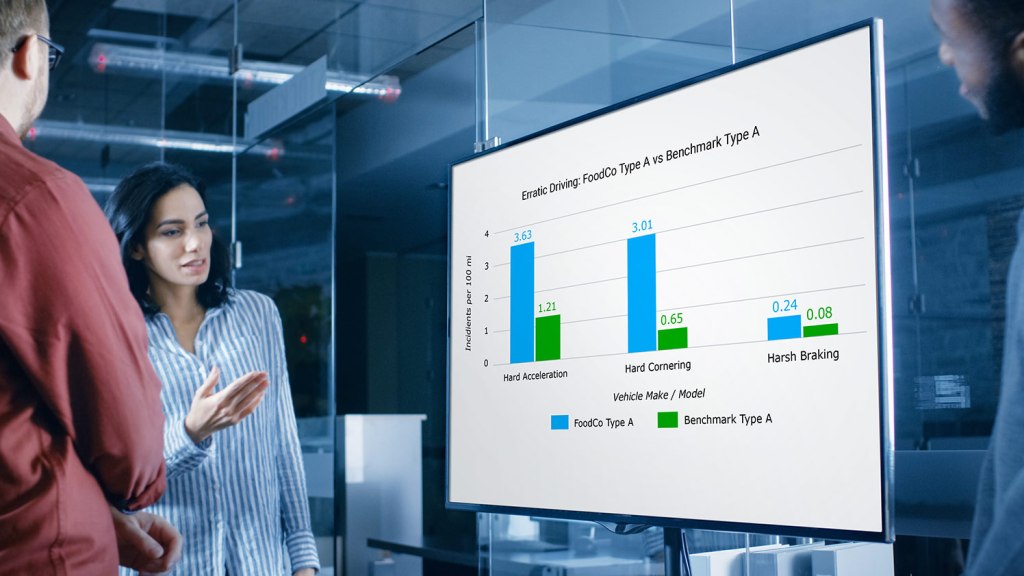
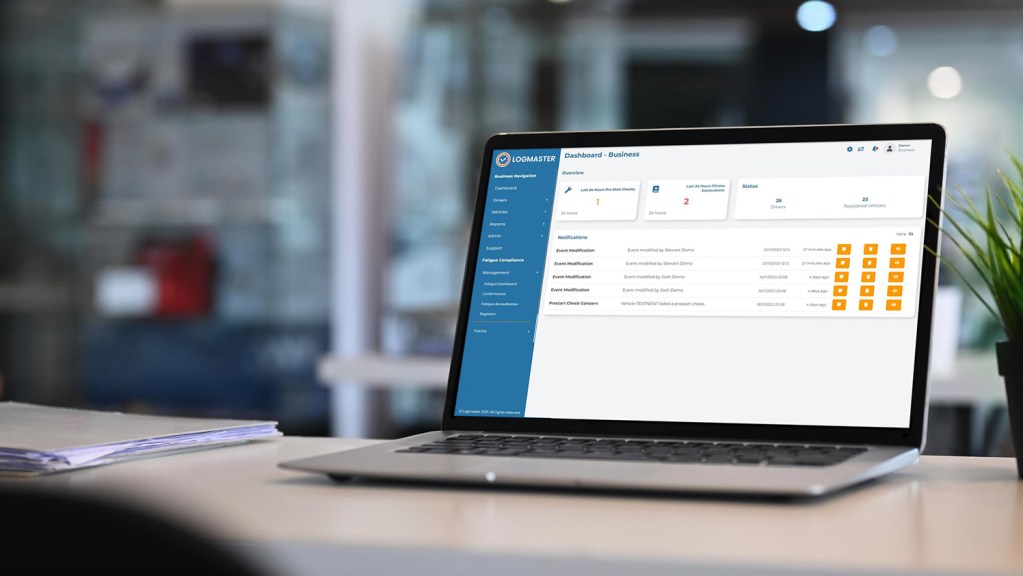

Geotab recently unveiled its Geotab Ace generative AI copilot, which is integrated into the MyGeotab telematics platform
“Geotab Ace represents not just an evolution in fleet management, but the next step in harnessing the power of trusted data,” Geotab VP of Data and Analytics, Mike Branch, says.
“By bringing the intuitive simplicity of conversational AI directly into the Geotab platform, we are transforming the way fleets interact with their data, crafting a future where insights are immediate, intelligent and instrumental to success.”
The Geotab solution is also compatible with third-party AI-powered dash cams, which allow the system to predict imminent collisions and send instant in-cab feedback to drivers – before an incident occurs.
Many of the age-old problems facing the transport industry can be solved using AI, which can be likened to having a world-class team of data scientists ready to work for your business at the click of a button.
It will, however, be critically important to use closed-loop AI systems that don’t breach data security or introduce cyber threats to your operation.
The 2025 Brisbane Truck Show will provide the most technologically advanced showing of solutions yet, and the exciting part is that much of the technology is available to your fleet now. At the next show, consider how AI can work for you and your transport operation behind the scenes – 24 hours a day, seven days a week – harnessing the technology of tomorrow.
Read More: Axle innovations Set To Shine At BTS25